
 Case Study
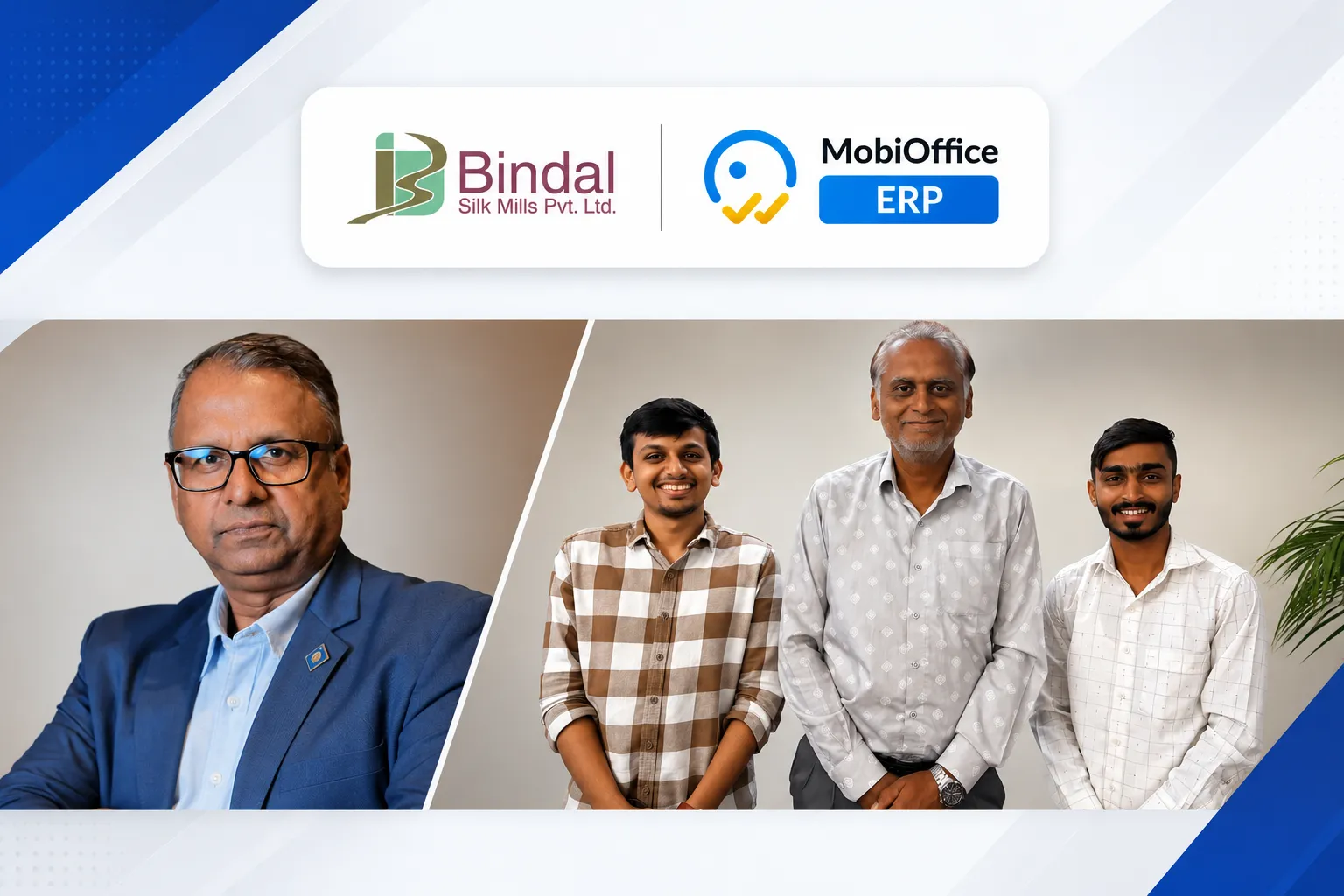
 14 years on MobiOffice. Bindal Silk Mills, Surat.
A 1,400-person multi-process unit running fabric dyeing, printing, and finishing on one system — for over 14 years and counting.
- Location
- Surat, Gujarat
- In Business
- 14+ years
- Workforce
- 1,400+
- Machines
- 60+
01 — A 14-year partnership
Built with the software. Not on top of it.
Bindal Silk Mills did not arrive at MobiOffice from a paper-based operation. They had already invested in technology twice — first with a custom in-house ERP built by a dedicated team of five developers, then with Dynamics. Each system either lacked the depth they needed or created new problems of its own.
The trigger for switching to MobiOffice was specific: attendance and punching integration — a system that could connect workforce data with production records across multiple floors and shifts. MobiOffice offered it. Fourteen years later, that decision has not needed to be revisited.
“After MobiOffice, it does not feel like software imposed on our operation. It feels like a system built for the way we work — because in many ways, it was.”
02 — The challenge
Three systems in. Still searching for the right one.
Despite having invested in technology earlier, Bindal's operations were still running against the same fundamental constraints. The problem was not a lack of software — it was a lack of software built for the way a multi-process dyeing unit actually works.
- Paper-based records with no backup — retrieving a file from five years ago could take two full days of searching through physical folders
- IT-gated data access — every floor supervisor had to physically walk to the IT room to request a record, a report, or a reprint
- Dye and chemical quantities issued by handwritten parchi — no recipe standard enforced per batch, no way to compare actual vs. planned consumption
- Manual lot and batch registers — tracking a lot across stages meant searching through multiple ledger books by hand
- No on-demand reports — every report required manual compilation, involving the IT team each time
03 — Dye & chemical control
~5% off the dye bill. Without changing the process.
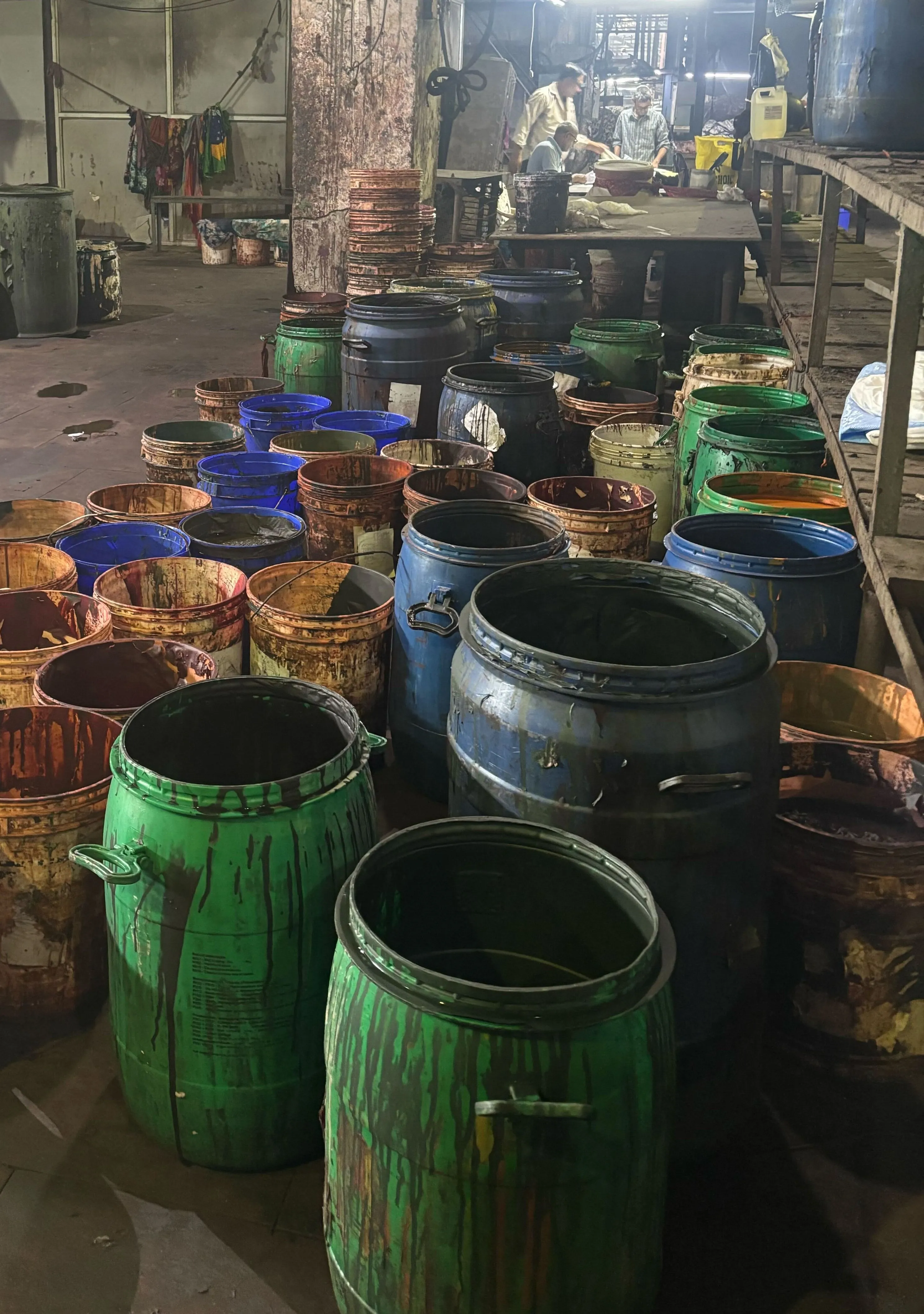
Before MobiOffice, dye and chemical quantities were issued to each batch using handwritten parchis — no system validation, no recipe standard enforced per batch, no mechanism to compare what was issued against what should have been consumed based on the fabric type and program.
After MobiOffice, every chemical issuance is recorded digitally against the batch, compared against standard recipe parameters, and trackable retroactively by machine or by program. The result: an estimated 5 percent reduction in dye and chemical consumption — a meaningful saving on one of the unit's highest variable costs, achieved without any change in the actual dyeing process.
04 — Floor access
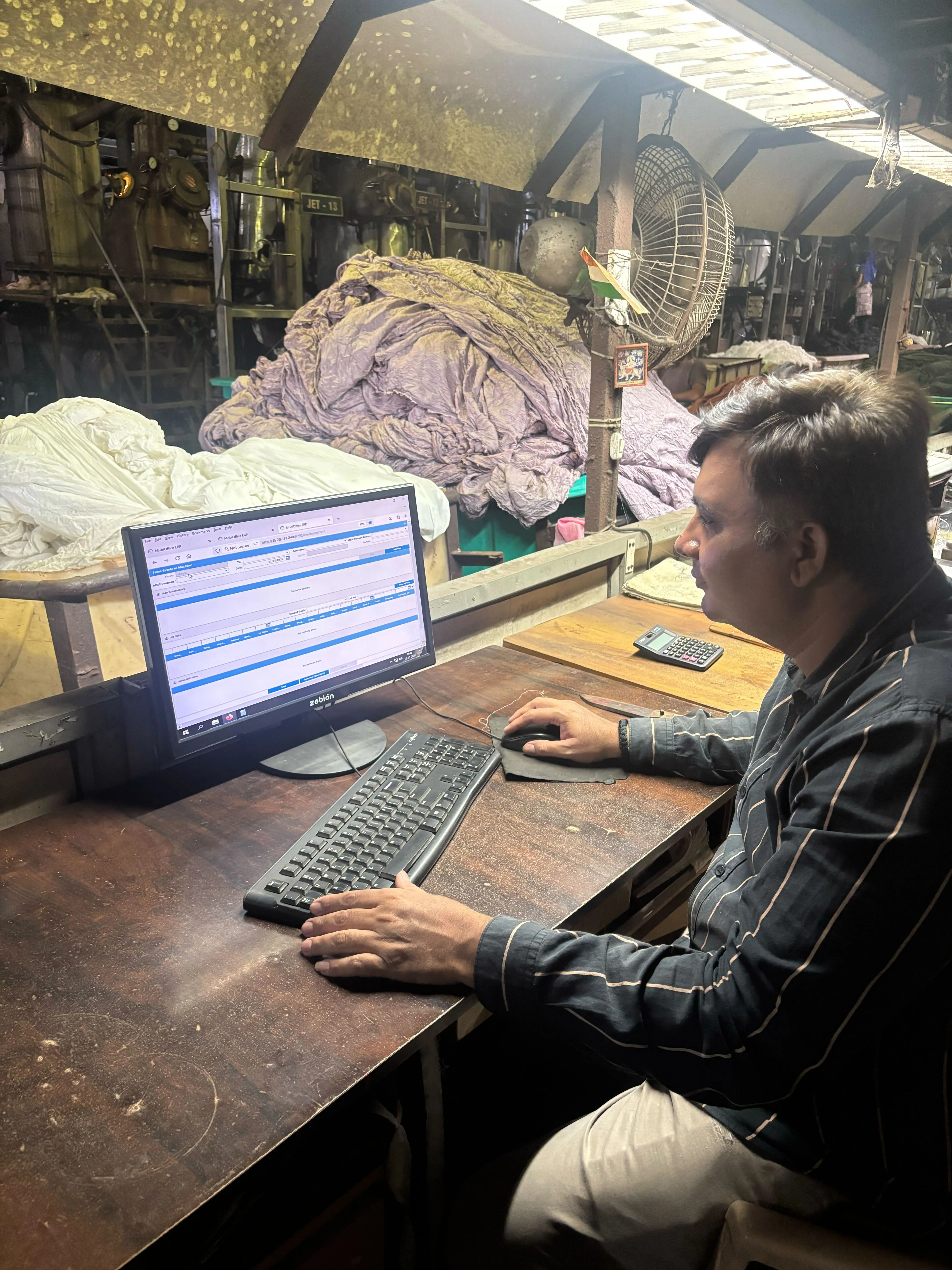
Floor terminals everywhere. Zero IT room visits.
Previously, any supervisor who needed a record, a report, or a reprint had to physically walk to the IT room. Now there is a terminal on every floor — dedicated workstations spread across the unit. Every supervisor accesses what they need independently, without delay, without creating work for the IT team.
This is not just a convenience improvement. It changes the speed at which decisions are made on the floor. A supervisor checking a taka balance mid-shift does not wait — they check it, act on it, and move on.
05 — Data on demand
From a 2-day search to a button.
Retrieving historical data used to mean physically searching through archived folders. For records more than a year old, this could take up to two full days. There was no guarantee the physical record was intact or findable.
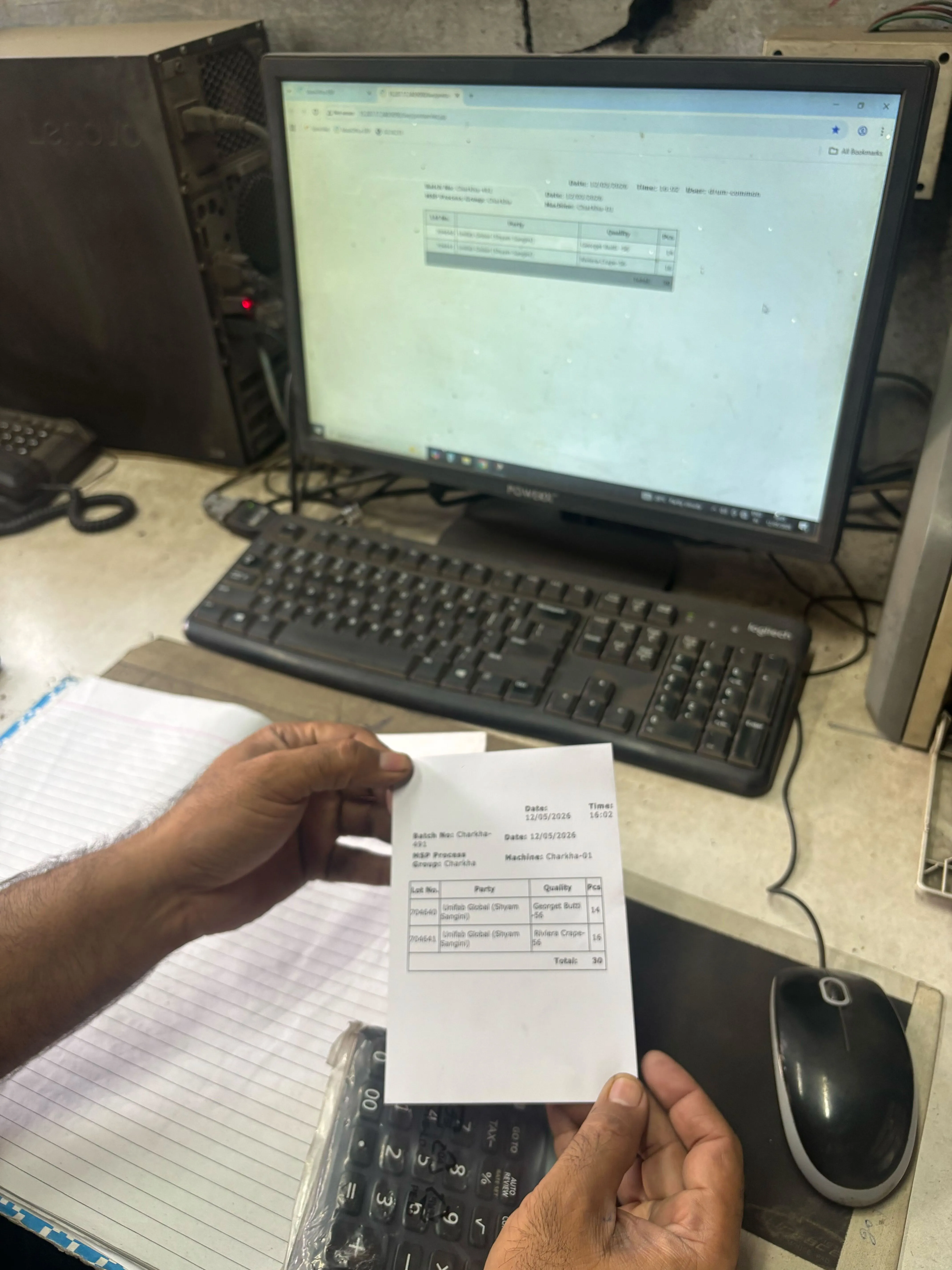
Now any report — taka balance, drum timing, chemical consumption, gatepass, production data — is on demand from any floor terminal. Five-year-old data is as accessible as yesterday's. The Report Generator Module was built specifically at Bindal's request, and later made available to all MobiOffice clients.
“The report we needed used to be a request. Now it is a button.”
06 — Dispatch & traceability
Every lot. Every stage. Retrievable in seconds.
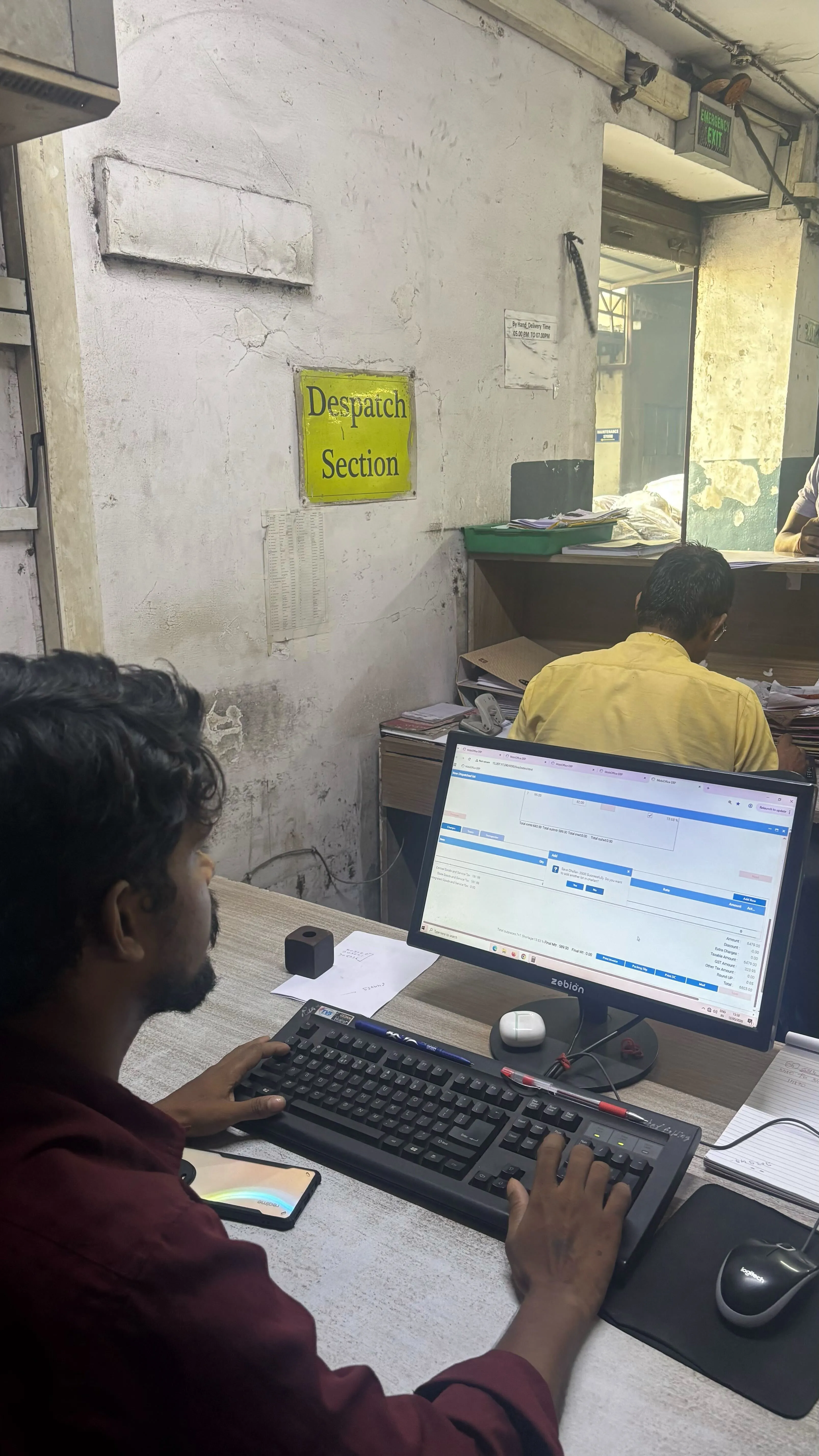
Dispatch at Bindal is now invoice-number based. Every dispatch record links directly back to the lot and batch chain it originated from — faster processing, fewer errors, and the ability to resolve post-dispatch customer queries immediately by pulling the full lot history in seconds.
Even gatepass issuance — previously a paper process — is now generated and managed through MobiOffice. Lot-to-lot tracking covers every processing stage: fabric dyeing, printing, finishing, and folding. Every stage of every lot is visible, searchable, and retrievable in seconds.
07 — Before & after
Nine areas. Transformed.
| Area | Before | After MobiOffice |
|---|---|---|
| Dye & chemical tracking | Hand parchi, no validation | Digital per batch — ~5% cost reduction |
| Record access | IT department only | Terminal on every floor, self-serve |
| Historical data retrieval | Physical folders, up to 2 days | On-demand in seconds from any terminal |
| Lot & batch traceability | Manual ledger books | Digital lot-to-lot tracking, every stage |
| Machine downtime | Not systematically recorded | Logged with stoppage reason per machine |
| Reports | Manual, on request to IT team | On-demand via Report Generator Module |
| Dispatch | Manual entry, error-prone | Invoice-number based, fast and accurate |
| Gatepass | Paper-based | Generated digitally through MobiOffice |
| Data backup & recovery | Paper only — no recovery if lost | Cloud-backed, permanent, retrievable |
08 — In closing
A foundation, not a fix.
The Bindal story is not about a business that found a solution to a specific problem. It is about a business that built 14 years of operations on a single, reliable system — and never looked back.
“The software has grown with us. What we needed, they built. What they built, we use every single day. That is what fourteen years of the right partnership looks like.”
Run a multi-process dyeing or printing unit?
Tell us your machine count and current pain points on WhatsApp. We'll show you MobiOffice on a real batch — not a demo dataset.
WhatsApp Us2-hour reply, Mon–Sat